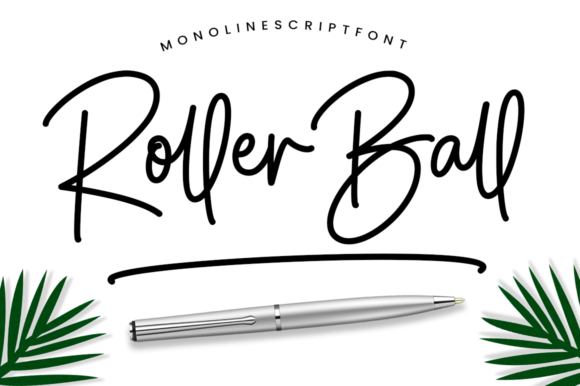
Roller Ball Font for Polished, Memorable Branding
Two weeks ago, I sat at my kitchen table with a stack of blank candle labels, a half-finished Canva mockup, and that familiar “something’s off” feeling. My small-batch soy candle business had grown—more local stockists, more Instagram DMs asking where to buy—but the visuals still looked like a well-meaning hobby, not a brand people would remember. That’s when I tried Roller Ball. Not just any script font—Roller Ball is an exquisite handwritten font, masterfully designed to become a true favorite. It holds onto that elegant, calligraphic soul while feeling undeniably current and easy to live with. And yes—it’s a Script Handwritten typeface built for real-world use, not just art projects.
Roller Ball for Candle Jar Labels and Handmade Product Packaging
If you’ve ever squinted at a tiny label on a 4 oz candle jar, you know how much weight a single font carries. Roller Ball shines here—not as body text, but as your product name, scent title, or signature line. Its smooth, confident strokes read clearly even at 10–12 pt on matte kraft labels. Because Roller Ball is PUA encoded, every alternate glyph and ligature works reliably in design apps like Canva, Illustrator, and Affinity Designer—no missing characters mid-label print run. I used it for “Lavender & Rain” on my best-selling candle: soft enough to feel handmade, structured enough to feel intentional. Customers started tagging me in unboxings saying, “Your packaging feels *special*.” That’s not magic—it’s Roller Ball doing quiet, consistent work.
Roller Ball for Café Menu Design and Printed Hospitality Graphics
My friend Maya, who runs a cozy neighborhood café, swapped her generic Google Font menu for one set entirely in Roller Ball—just for section headers and drink names (“Honey Lavender Latte,” “Toasted Almond Croissant”). She kept the body copy clean and legible in a friendly sans serif, but let Roller Ball add warmth and personality where it mattered most. The result? A menu that feels hand-crafted, not templated. Roller Ball is an exquisite handwritten font—but it’s also surprisingly versatile for display use. Its generous x-height and open letterforms hold up beautifully on laminated counter cards and chalkboard-style digital banners. No more squinting or second-guessing whether “Maple Cardamom Toast” reads as warm or wobbly.
Roller Ball for Social Media Bios, Story Text, and Small Business Instagram Graphics
Let’s talk thumbnails. On Instagram, your story text needs to land in under two seconds. Roller Ball cuts through the noise—not because it’s loud, but because it’s *distinctive*. As a Script Handwritten font, it adds humanity without sacrificing clarity. I use it for short phrases only: “Hand-poured weekly,” “Small batch only,” “Made with oat milk.” Paired with a light-weight sans serif (think Montserrat Light or Inter), Roller Ball becomes the voice behind the visuals—not shouting, but leaning in. Bonus: its PUA encoding means emoji + text combos stay intact across devices. No broken hearts or floating apostrophes.
Roller Ball for Logo Design and Boutique Brand Identity Systems
Your logo is often the first thing people see—and the last thing they forget. Roller Ball isn’t meant for long paragraphs, but it *is* ideal for short, ownable names: “Wild Fern Apothecary,” “The Daily Loaf,” “Stitch & Thread Co.” Its classy calligraphic influences give instant credibility; its contemporary rhythm keeps it from feeling dated or overly formal. As a premium Fonts choice, it signals care and intentionality—exactly what boutique owners, skincare makers, and ceramic studios want to project. Just remember: always test your Roller Ball logo at multiple sizes. It sings at 24–48 pt on business cards and website headers, but avoid using it smaller than 16 pt in print.
Roller Ball for Thank-You Cards, Stickers, and Customer Touchpoints
The little things build trust. A handwritten-style “Thank you for trusting us” on a sticker tucked into a package? That’s Roller Ball working overtime. Its natural flow mimics real penmanship—without the inconsistency of actual handwriting. Because Roller Ball is an exquisite handwritten font, it feels personal but polished. I use it for all customer-facing micro-copy: shipping labels (“Packed with care”), tissue paper stamps, and even email subject lines (“Your order is rolling out 🌟”). It’s not just decoration—it’s tone, translated into type.
Roller Ball Font Pairing Ideas for Clean, Professional Brand Kits
You don’t need ten fonts to look professional—you need two that respect each other. Roller Ball pairs effortlessly with airy sans serifs (like Poppins or Nunito), classic serifs (Cormorant Garamond), or even minimalist monospaced options for contrast. Avoid pairing it with other scripts—that’s visual noise, not harmony. Think of Roller Ball as your brand’s voice: expressive, sincere, refined. Let your secondary font be the steady hand holding the mic. Also—check your Roller Ball download for included alternates and stylistic sets. Some versions include swashes, flourishes, and lowercase variants that make social posts or gift tags feel extra considered.
Roller Ball Fonts for Commercial Use and Client-Friendly Licensing
Before you drop Roller Ball into a client’s packaging mockup or your Etsy shop banner—double-check the license. As a commercial Fonts asset, it typically covers unlimited personal *and* business use—including physical products, digital ads, and client work (with proper attribution if required). But always confirm file formats: most Roller Ball bundles include OTF, TTF, and webfont files—so whether you’re designing a Shopify banner or prepping a PDF menu for print, you’re covered. And because Roller Ball is PUA encoded, you’ll never lose access to those thoughtful ligatures and contextual alternates when exporting or sharing files.